
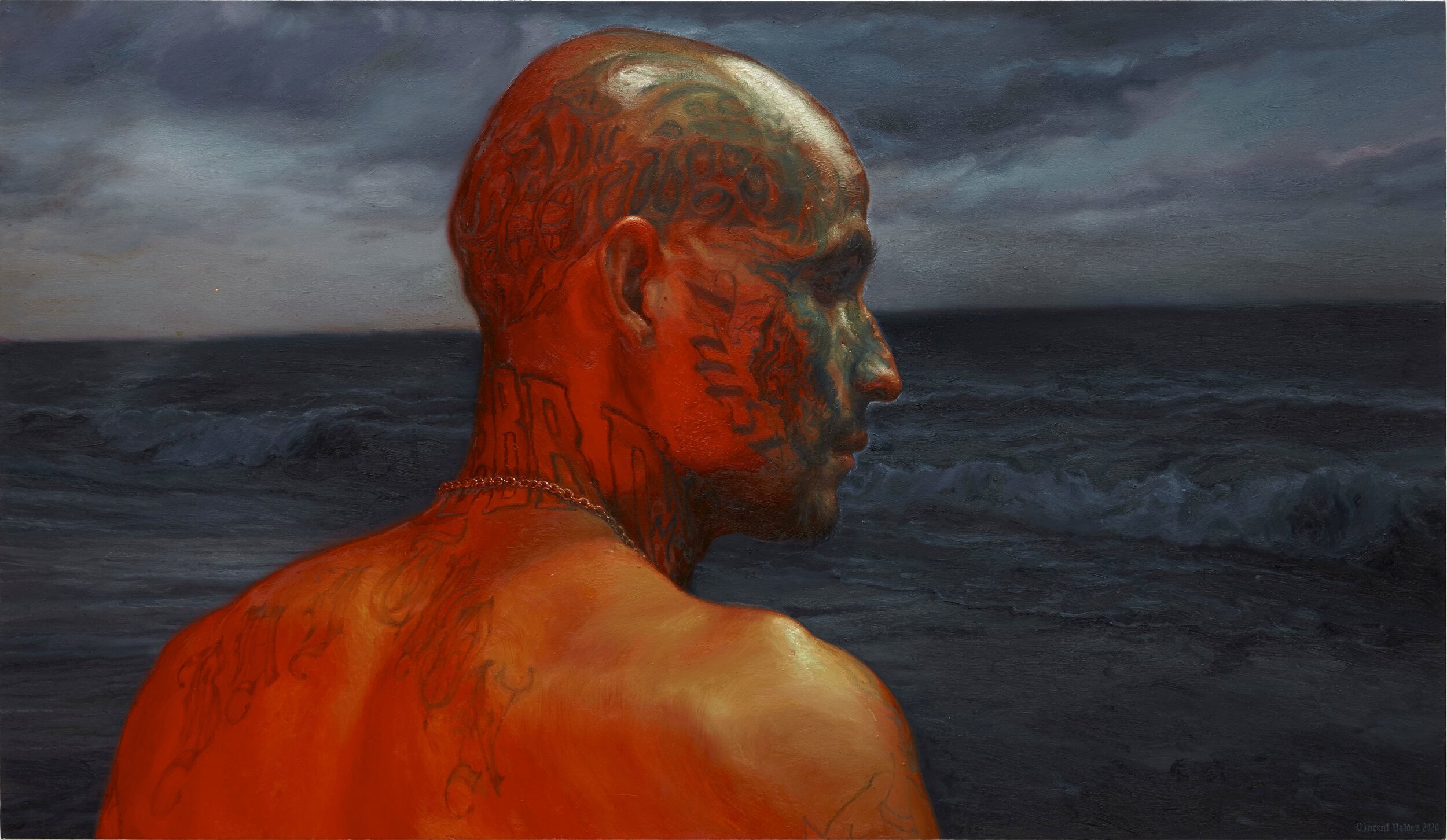
A 2020 oil painting called “The Sea” is a part of a new exhibition at the Des Moines Art Center. Its Texas-based creator, Vincent Valdez, received a MacArthur “genius” grant during the show’s installation. (Photo: vincentvaldezstudio.com)
By Michael Morain
Editor
Us or them. Native or newcomer. Black or white or brown.
In a time when we’re often urged to choose sides, especially in the week before midterm elections, a big new traveling show at the Des Moines Art Center “offers an antidote to the multiple forces that today pull people and cultures apart,” Janne Sirén wrote in the exhibition catalog.
He leads the Buffalo AKG Art Museum, where the show originated. Featuring paintings by more than 50 contemporary Latinx artists from across the United States, the exhibition opened with a splash this weekend in Des Moines and will stay through Jan. 24 before moving on to Phoenix and Seattle.
Its title, “Let Us Gather in a Flourishing Way,” comes from a Spanglish poem by former U.S. Poet Laureate Juan Felipe Herrera, who, like the show’s artists, often feels “ni de aquí, ne de allá” – neither from here, nor from there. The artists were either born to immigrants in the United States or moved here when they were very young.
In a panel discussion on Sunday, several of the participating artists explained how they started making artwork as a way to navigate that cultural limbo. Many of them carry overlapping identities — American, Latino/a/x, Chicano/a/x, Caribbean, Nuyorican, even Diasporican — which rarely pop up as options on standardized forms. They’re accustomed to checking the “other” box.
“A lot of them use their art to find their way through that,” Art Center senior curator Laura Burkhalter told me during a walk through galleries in both the Saarinen and Pei wings of the museum.
But the show “is also about how artists expand the definition of painting,” she added.
The artists are pushing against centuries of mostly Eurocentric rules about who gets to make art, how it’s made and what it should portray.
“The history of imperialism is embedded in landscape painting. The history of class hegemony is embedded in portraiture,” said Andrea Alvarez, the curator in Buffalo who started organizing the exhibition more than five years ago.
The old distinctions that curators and scholars use to categorize artwork no longer matter to the artists themselves, Alvarez said. “These artists are bucking all of those traditions in really smart and strategic ways.”
Consider just three examples in the new show:
In a painting called “Cruising Queens,” Chicago-based artist Moises Salazar Tlatenchi reimagines Emanuel Leutze’s famous 1851 painting “Washington Crossing the Delaware.” In the new version, the guys on the boat are rendered in bronze glitter, with their military coats open to reveal Speedos.
In “Man on a Trampoline,” the Phoenix artist Larry Madrigal renders a balding man and a dozen kids tumbling high above a trampoline, as a host of angels might fly through clouds on the ceiling of the Sistine Chapel.
And in “American Pawn Shop Bench,” Alfonso Gonzalez Jr., the son of a sign painter, recreates layers of advertising and graffiti on a humble cement bench from a Los Angeles sidewalk. A sticker on the back advertises a taxi company. (One of the Art Center’s installers called the phone number; it works.)
The show is loosely organized into a half-dozen sections, but its themes spin off in countless directions: immigration, assimilation, family ties, natural disasters, art history and contemporary politics.
“There are layers upon layers,” Burkhalter said. “It’s a complicated show, but it’s joyful and beautiful, too. There’s a spoonful of sugar.”
It’s a happy accident that the exhibition opened just a week before the Art Center’s annual Day of the Dead festivities, set for this Sunday. Now in its 26th year, the local tradition is almost as old as some of the artists in the new show.
And the spirit is similar: to find common ground without plowing over our differences. As Sirén notes of the artists in the catalog, the exhibition sets out “to celebrate their individual voices and perspectives as well as their gathering together.”
E pluribus unum. De muchos, uno.









Show Comments (0)