
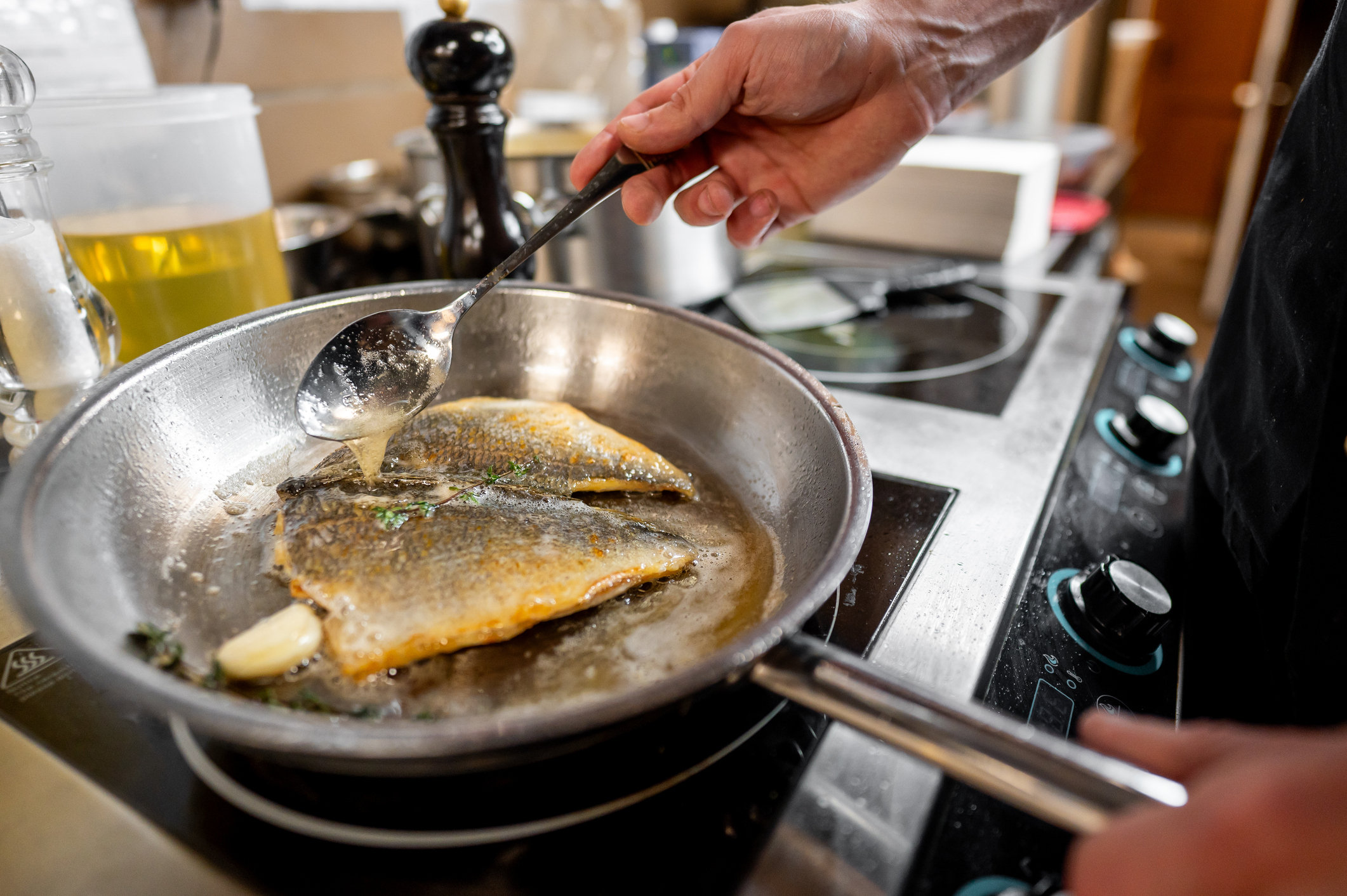

For versatility in the kitchen, it’s hard to beat a stainless-steel skillet. (Photo: Getty)
By Haley Scarpino
I have more cookware than any home kitchen needs, but I tend to reach for the same few pans: a stainless steel skillet for weeknight cooking, a cast-iron skillet for grilled cheese sandwiches, a Dutch oven for soups and a nonstick skillet I use mostly for eggs.
The best pan depends on the job. The most useful cookware collection is built around the meals you actually make. If you’re ready for an upgrade or giving someone a starter kit, here are a few tips to consider.
Start with a clad stainless-steel skillet
If I could recommend only one pan, it would be a 12-inch, clad, stainless steel skillet. It’s durable, easy to clean and versatile enough to sauté vegetables, brown chicken thighs, make a pan sauce or cook with acidic ingredients such as tomatoes and wine.
Stainless steel doesn’t conduct heat very well on its own, so manufacturers sandwich a more conductive metal — usually aluminum — between layers of the steel. In fully clad cookware, those layers cover the bottom and extend up the sides, helping the skillet heat faster and more evenly. The 12-inch size gives ingredients room to brown, though the added weight is worth considering. Whenever possible, try lifting a pan before you buy it.
Food can stick to stainless steel as it browns, so a little patience is important. I preheat the skillet over medium heat, add fat once the pan is hot and avoid crowding the pan with too much food. Once the food has browned, it should release easily.
Keep a nonstick skillet for eggs
I don’t use nonstick cookware very often. Most of the time, I want food to brown and caramelize — that’s the Maillard reaction responsible for the complex flavor of steak, toast and roasted vegetables. But eggs are the exception. I want them tender and easy to lift from the pan. Whether I fry eggs, scramble them or make an omelet, I use a nonstick pan.
I cook them over low to medium heat, use wood or silicone utensils, and wash with mild dish soap and a soft sponge. I replace the pan when the surface becomes damaged or eggs start to stick. Nonstick is the exception to my buy-it-for-life philosophy.
Add a cast-iron skillet for deep browning
I reach for cast iron when I want a serious sear. It’s especially good for steaks, burgers, fajitas, cornbread and crisp golden-brown grilled cheese.
Cast iron doesn’t heat quickly or evenly, but once it is hot, it holds heat exceptionally well. That helps the pan maintain its temperature when a cold steak hits the surface, encouraging the meat to brown instead of steam. The same quality helps cornbread develop a deeply browned crust.
Because cast iron heats slowly, I preheat it slowly over low or medium heat instead of blasting it on high, which helps equalize the temperature throughout the pan and make cooking more predictable. There are a few trade-offs: Cast iron is heavy, the handle gets extremely hot and the pan requires a little extra maintenance. Cast iron must be dried promptly to prevent rust, and it occasionally needs its seasoning refreshed. Dish soap is fine for a well-seasoned skillet, but I never leave mine soaking in the sink.
A basic Lodge skillet can deliver excellent results. More expensive options may be lighter, better balanced and smoother, but they don’t necessarily brown food better.
Invest in an enameled Dutch oven
I reach for an enameled, cast-iron Dutch oven when I am making a dinner that needs time. Dutch ovens excel at braises, stews, soups, beans, chili, tomato sauce and no-knead bread. The enamel eliminates the need for seasoning and allows for cooking acidic ingredients such as tomatoes, wine and citrus. It doesn’t make the pot nonstick, so meat can still brown and leave flavorful fond.
Weight is the biggest drawback. A full enameled cast-iron Dutch oven can be hard to move, so I recommend considering its weight when choosing a size. My 6-quart Dutch oven is large enough for most of what I cook without being unnecessarily cumbersome.
Brands such as Le Creuset and Staub cost more because of details such as enamel quality, handles, lid design, warranties and color selection. A less expensive Dutch oven can still cook excellent food.
Build a cookware collection around how you cook
If I were starting from scratch, I would begin with a 10- or 12-inch clad stainless-steel skillet. Next, I’d add a saucepan for grains, sauces and smaller portions; or a stockpot for pasta, large batches of soup and meals for a crowd.
From there, the order depends on how you cook. Someone who makes eggs every morning might prioritize a nonstick skillet, while a cook who regularly makes soups, stews and braises may get more use from a Dutch oven. Steak lovers might rank a cast-iron skillet higher.
There is no reason to spend thousands of dollars at once or discard cookware that still works. I would buy the next piece that solves a real problem, learn its strengths and add another only when your cooking calls for it.
A good cookware collection is assembled one useful piece at a time. The pans don’t need to match, but they do need to earn their cabinet space.
Haley Scarpino is a chef, home cook, recipe tester, food editor and graduate of the Iowa Culinary Institute.








Show Comments (0)