

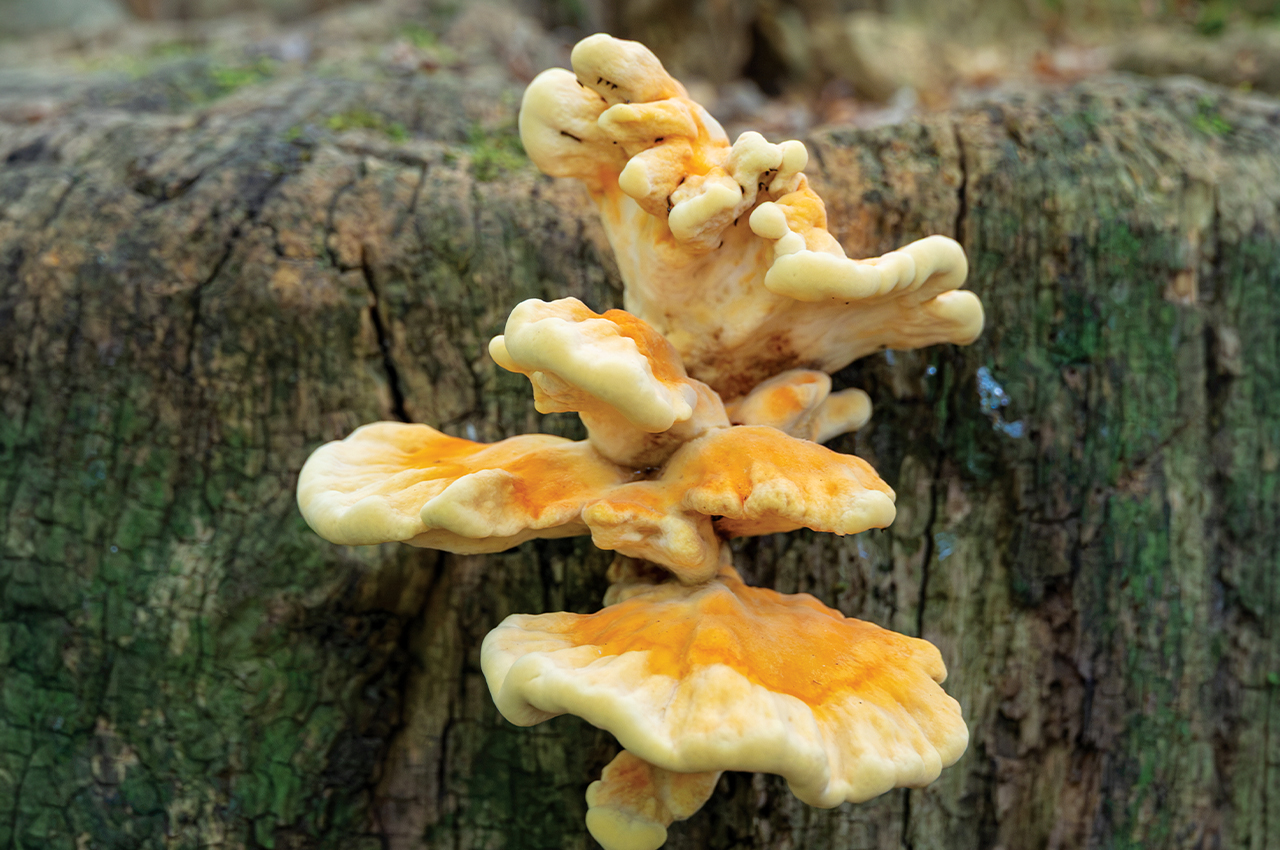

Chicken of the Woods mushrooms
We all know the story of the first Thanksgiving, when Indigenous people shared their bounty with the Pilgrims in what is now New England. But what about the bounties of the Midwest?
“By late November, foraging in Iowa shifts from the abundant greens of summer to the hearty roots and nuts of autumn,” said Missy Smith, who works for Polk Country Conservation at the Jester Park Nature Center.
Curious? Here are some of her suggestions for your own Thanksgiving table:
Jerusalem artichokes (sunchokes): These native tubers are best harvested after the first frost, which naturally sweetens them. They’re good raw, roasted or pureed into a creamy soup. (Because harvesting them requires digging, they must be gathered on private land. Digging is a no-no in public parks.)
Black walnuts: They require a bit of effort to crack, but their robust, earthy flavor is perfect for tortes, pies or as a savory crust for roasted meats.
Eastern red cedar (juniper) berries: These pale blue berries can be harvested in late fall and winter. They offer a resinous, piney flavor that makes a good dry rub or glaze for rich dishes.
Wild apples and crabapples: While many drop earlier in the season, you can often find late-hanging fruit for cakes, sauces or hot cider.
Mushrooms: Dried or frozen Hen of the Woods and Chicken of the Woods mushrooms from the autumn bloom make great gravies and stuffings.
— Hailey Evans





Show Comments (0)